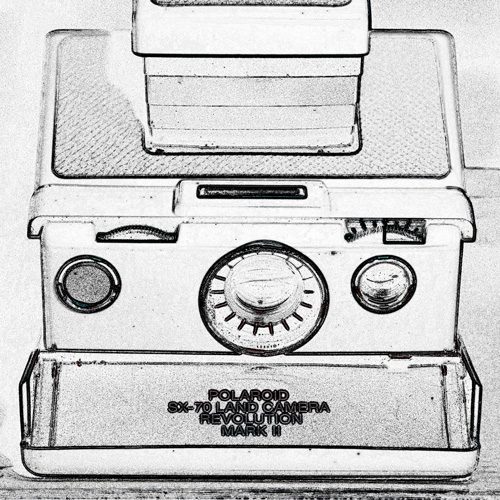
First of all, thank you for trusting our product. The following tutorial is based on the premise that your camera has been fully repaired and inspected and calibrated.
Basic Usage
For basic shooting functions, you can refer to the original Polaroid SX-70 instruction manual. The usage and precautions for fully automatic exposure shooting are almost identical to the original manual, but there are two differences:
1.Micron bulbs are not supported.
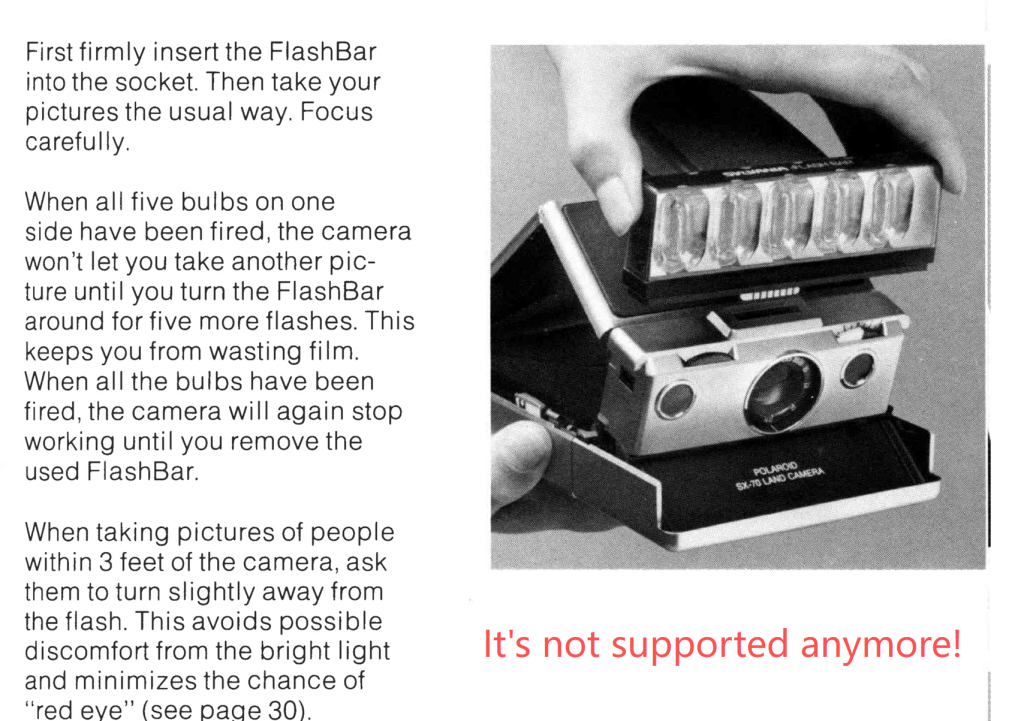
2.Darkslide won’t be ejected automatically ——press shutter button to eject it.
Please read the original SX-70 manual for basic usage:https://sx70r.com/wp-content/uploads/2026/03/SX-70-MANUAL.pdf
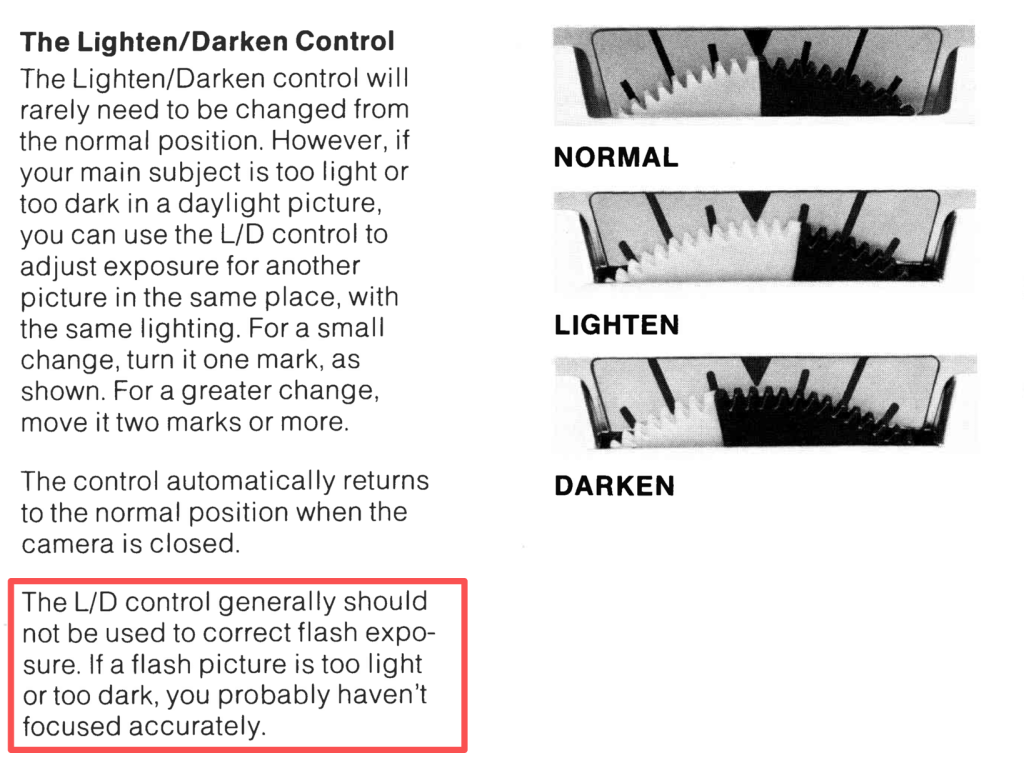
The L/D Wheel remains unchanged in its operation, but please pay attention to the flash part in the instruction manual; accurate focusing is still essential.
Although the manual states that the L/D Wheel should not be used for flash adjustment, it can actually still be used to adjust exposure in flash mode if you did use it.
When a flash is inserted and the automatic mode is used, the SX-70R’s circuit board can automatically balance ambient light and flash exposure, which is sufficient for most situations. However, it will not work well in excessively strong light or when the light reflected from the object itself is too strong. In these cases, you will need to manually adjust the L/D wheel to reduce or increase the exposure.
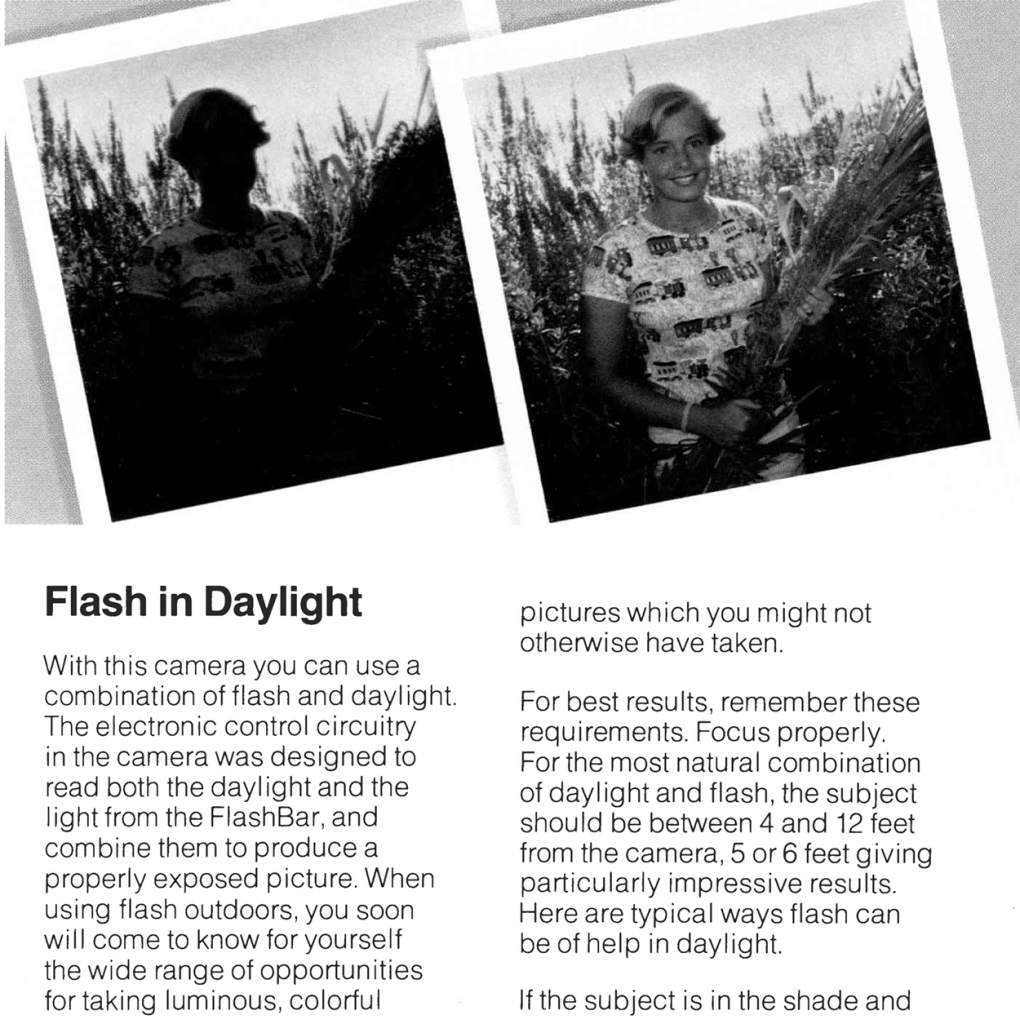
However, you still need to follow the instructions in the manual regarding the use of flash in daylight.
Flash Picture Fine Tunning
While flash exposures are generally well-exposed most of the time, Polaroid cameras use a fixed-brightness flash, with the aperture controlled by the interceptor based on distance. This means most objects reflect light appropriately, but exposure can be incorrect with very bright or very dark objects. Common scenarios include:
- If the object’s surface is white or strongly reflective, using a flash will result in overexposure; adjust the L/D wheel to reduce the exposure.
- If the object’s surface is black or dark, it will result in slight underexposure; increase the exposure.
Please note that this does not apply to situations where no flash is used; it may seem counterintuitive, so please understand this carefully.
Common Film Issues
Since Polaroid restarted film production, product quality has improved significantly. However, due to transportation, some less common problems arise. Here are some:
- This is the most common: the film wasn’t heated, but the overall contrast of the image is reduced, and dark areas appear a dark pinkish hue. This is usually because the photographic paper has been exposed to X-rays, especially airport X-ray security screening devices.
- Thin beams of light, like laser cuts, appear on the photograph. This is due to exposure to CT scans used in security checks.
- The camera has finished taking the picture, but the film hasn’t popped out. This is usually because the film is too dry or due to other reasons, causing it to become very dry and develop a bulge in the middle, preventing the hook from pushing it forward
(MORE COMING SOON)